
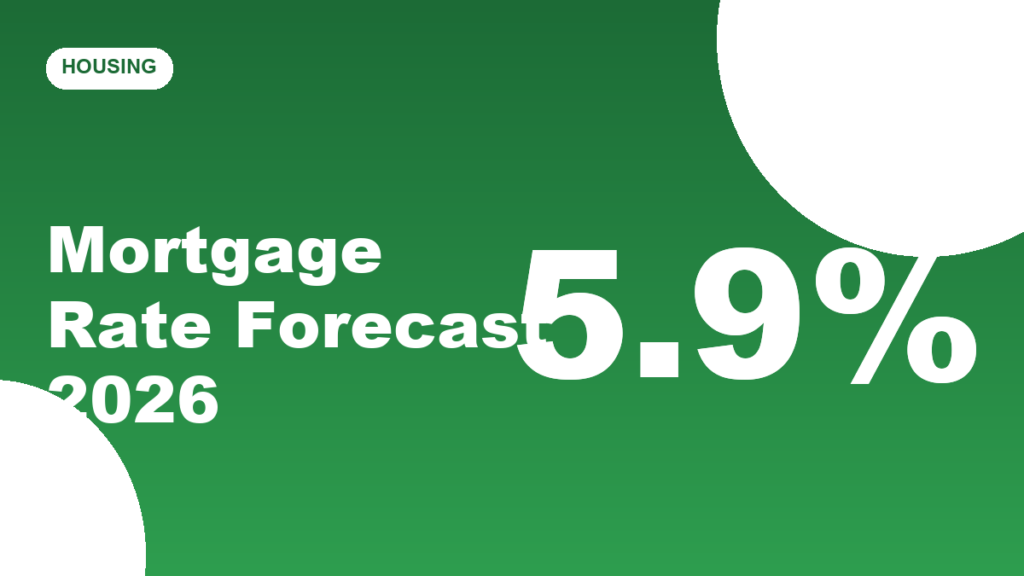
If you’re waiting for mortgage rates to fall before buying or refinancing, here’s the short version: most major forecasts expect the average 30-year fixed rate to drift down toward roughly 5.9% by the end of 2026, easing from the recent 6% to 7% range. That would be welcome relief, but it is a forecast, not a promise. The Federal Reserve held its benchmark rate steady through 2026, and some Fed officials have signaled that rate hikes are still possible if inflation proves sticky. In other words, plan around a likely modest decline, but don’t bet your timeline on a number nobody can guarantee.
What actually moves mortgage rates
Mortgage rates are often blamed on the Fed, but the connection is indirect. The Fed sets the short-term federal funds rate, which influences things like credit cards and home equity lines. Thirty-year mortgage rates, by contrast, track more closely with the 10-year Treasury yield and the spread that investors demand to buy mortgage-backed securities.
Those yields move on inflation expectations, the strength of the job market, and overall demand for U.S. government debt. When inflation cools and the economy slows, longer-term rates tend to ease. When inflation looks persistent, they climb. This is why mortgage rates can sometimes rise even when the Fed isn’t moving, and why a single Fed decision rarely produces the overnight drop buyers hope for.
The 5.9% forecast and its caveats
The roughly 5.9% year-end target reflects a fairly orderly path: inflation gradually settling and the economy avoiding major shocks. It’s a reasonable base case, but it comes with real caveats. Because the Fed held steady in 2026 and a few officials have left the door open to hikes, the downward path could stall or even reverse. Forecasts from earlier years have frequently missed in both directions.
Treat 5.9% as a midpoint guess, not a floor or a ceiling. If you want to understand the assumptions behind these numbers and how analysts think about where mortgage rates are headed in 2026, it’s worth reading a detailed breakdown rather than relying on a single headline figure. And because these projections shift, always confirm current averages with a primary source such as Freddie Mac’s weekly survey before making a decision.
Should you buy now or wait?
Waiting for a lower rate is a gamble on two things at once: that rates fall, and that home prices don’t rise enough to cancel out the savings. In many markets, limited inventory keeps prices firm even as rates ease, so a lower rate later can be offset by a higher purchase price.
A more reliable approach is to buy when the monthly payment fits comfortably in your budget and the home meets your needs. If rates drop meaningfully afterward, you can refinance. If they rise, you’ve locked in today’s terms. As the common saying goes, you marry the house and date the rate. Just make sure the payment works at today’s rate, not at a hoped-for future one.
The refinancing rule of thumb
If you already own, refinancing can make sense once rates fall enough to cover the cost. A widely used rule of thumb is to refinance when you can lower your rate by about 0.75 to 1 percentage point, though the right number depends on your loan size and closing costs.
The better test is your break-even point: divide your total refinancing costs by your monthly savings to see how many months it takes to recoup them. If you’ll stay in the home well past that point, refinancing likely pays off. If you might move sooner, it may not. Get a written Loan Estimate so you can compare costs precisely instead of relying on a verbal quote.
How to get the best rate available
You have more control over your rate than the forecasts suggest. A few steps consistently help:
- Strengthen your credit. Pay down balances and avoid opening new accounts before applying. A higher score can move you into a better pricing tier.
- Put more down if you can. A larger down payment lowers your loan-to-value ratio and can drop your rate, and reaching 20% lets you avoid private mortgage insurance.
- Shop at least three lenders. Rates and fees vary noticeably between banks, credit unions, and brokers. Gather quotes within a short window so the credit checks count as a single inquiry.
- Compare the full cost. Look at the APR and lender fees, not just the headline rate, since points and closing costs change the real price.
The bottom line
The most likely path for 2026 is a gradual slide toward the high 5% range, but the Fed’s pause and the chance of hikes mean nothing is locked in. Rather than trying to time the market, focus on what you control: a payment that fits your budget, a strong credit profile, and a willingness to compare lenders and refinance later if rates cooperate. For plain-English explainers on rates, refinancing, and everyday money decisions, WalletWisp is a helpful place to keep learning.