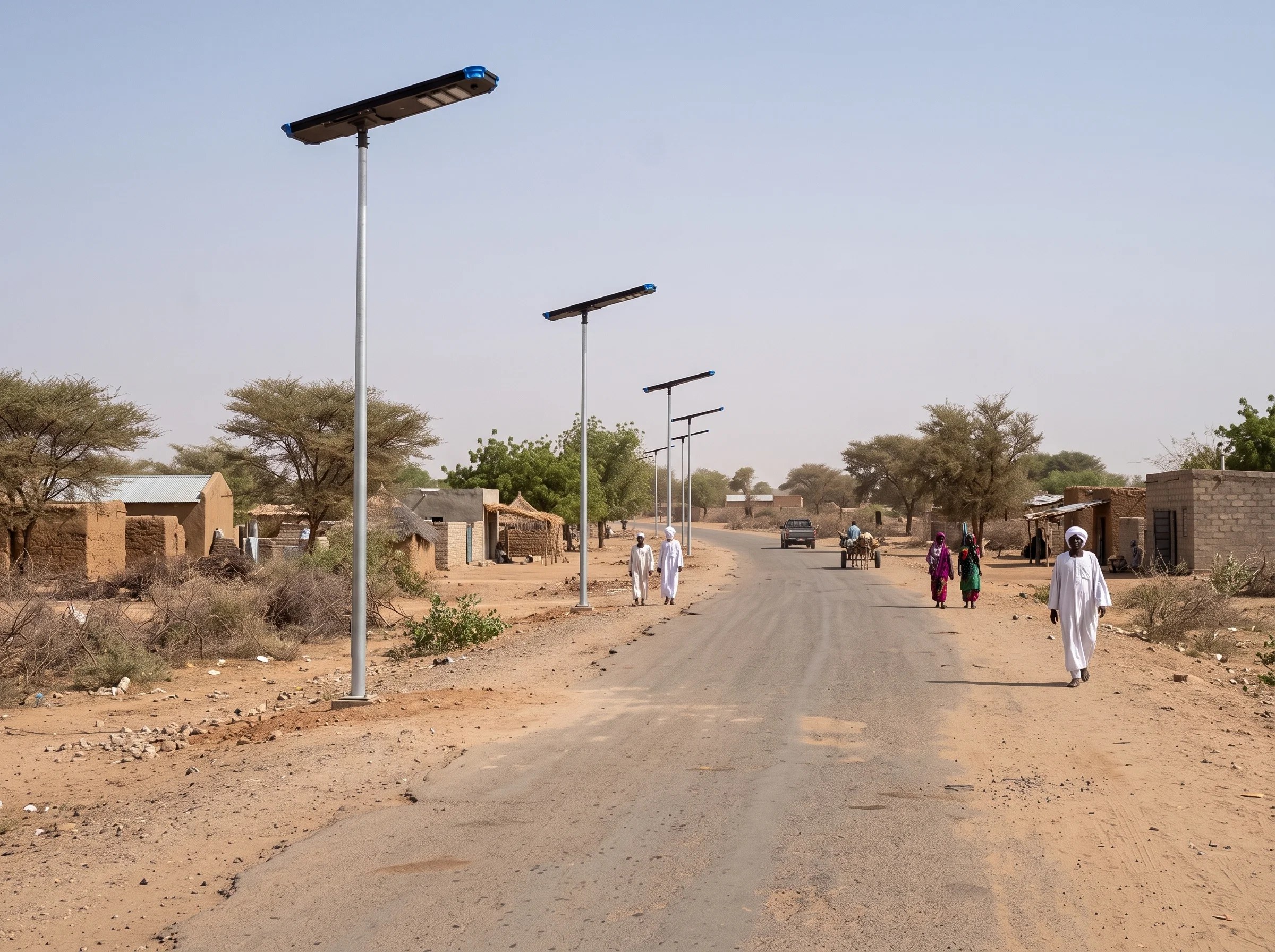
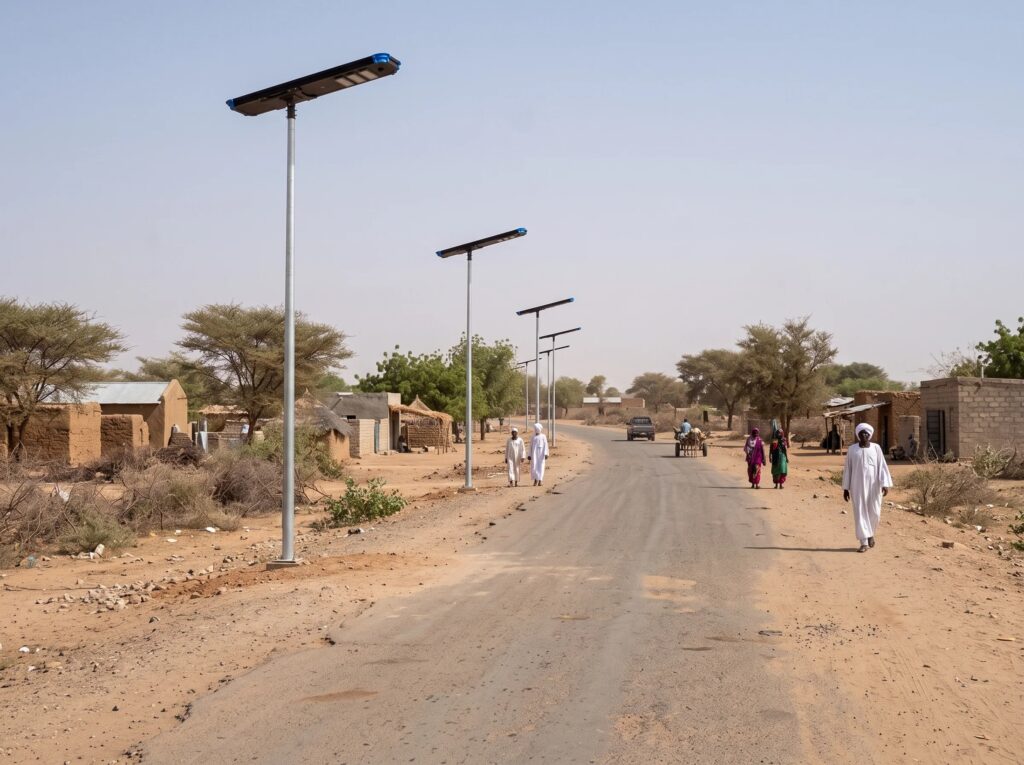
For many small towns and rural districts, street lighting has always been a wish list item. The roads are long, the grid is far away and the budget is small. Yet more and more of these communities are now lighting their streets with solar, often faster than larger cities. The difference is rarely the technology. It is how the project is planned and paid for.
This article looks at the main ways towns and villages fund solar street lighting today, and the planning steps that make a project attractive to the people holding the budget.
Why Solar Changes the Budget Conversation
With conventional street lighting, most of the cost sits outside the lamp: cable trenches, transformers, grid connection fees and, for decades afterwards, the monthly electricity bill. For a rural road several kilometres from the nearest substation, those costs can make the project impossible.
Solar street lights move the cost into the light itself. Each pole carries its own panel, battery and LED, so there is no cabling between poles and no energy bill. That makes the total project cost easier to estimate and easier to split into phases, which is exactly what funders want to see.
Where the Money Comes From
Local and regional budgets
Many towns start with their own capital budget, lighting the most important roads first: the market street, the road to the clinic or school, and the main junctions. Because solar lights need no grid works, a modest budget can deliver visible results in a single year, and the project can be extended street by street.
National programmes
Several countries run national street lighting or rural electrification programmes that co-fund local projects. These programmes usually come with standard technical specifications and approved product lists, so it pays to read them before choosing equipment.
Development banks and donors
Larger projects are often financed by development banks or donor agencies as part of road, energy or climate programmes. Their procurement rules are strict, with detailed technical scoring and documentation, but they make large rural lighting projects possible.
Public-private partnerships
In some places, a private company installs and maintains the lights and is paid over several years. This spreads the cost over time, but the contract needs clear performance terms, such as how many lights must be working and how quickly faults are repaired.
What Funders Want to See
Whatever the source, the people approving the budget ask similar questions. A strong project proposal answers them up front:
- Which roads, and why? A clear map of the roads to be lit, with the reason each one matters: safety, schools, markets, health centres or tourism.
- How much light is needed? The lighting level for each type of road, ideally based on a recognised standard rather than guesswork.
- Will it work all year? Proof that batteries and panels are sized for the cloudiest month, not an average sunny day.
- What will it cost over its life? Not just the purchase price, but battery replacement, maintenance and spare parts.
- Who will look after it? A named owner, a simple maintenance plan and a contact for spare parts.
Planning Steps That Make Funding Easier
Projects that win funding usually follow a clear path: a survey of the roads, a lighting design that shows where each pole goes, a system sizing sheet for the local climate, a realistic budget and a fair, performance-based tender. A detailed walk-through of that path, from survey to handover, is available in this guide to government solar street lighting projects.
Rural roads have their own needs. Poles are often far apart, the dust can be heavy, theft can be a risk, and there may be no technician nearby for months. Equipment designed for solar street lighting on rural and remote roads takes these conditions into account, with sealed batteries mounted at height, robust housings and long autonomy for cloudy spells.
Common Mistakes That Waste the Budget
- Buying the cheapest lights on a price-per-unit basis, then replacing failed batteries within two or three years.
- Placing poles without a lighting design, leaving dark gaps between them.
- Ignoring maintenance, so dusty panels slowly reduce the light until the road is dark again.
- Spreading the budget too thin, lighting many roads poorly instead of the most important roads well.
Final Thoughts
Solar has made street lighting realistic for towns and villages that could never afford grid extensions. The communities that get the most from it treat lighting as a small infrastructure project: they plan the roads, size the systems honestly, choose a funding route that fits and keep a simple maintenance plan. Done that way, a modest budget can light a town for many years.