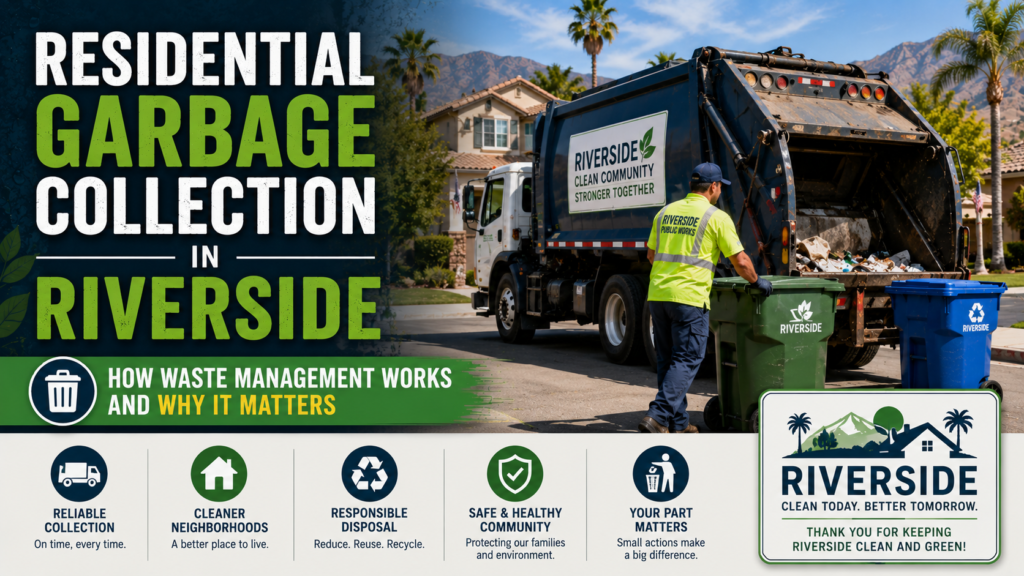
Residential garbage collection is one of the most fundamental public services that communities rely on to maintain cleanliness, public health, and environmental quality. In Riverside, California a city that has grown significantly over recent decades and continues to expand effective residential waste management is an essential component of daily life for hundreds of thousands of households.
Most residents interact with garbage collection services on a weekly basis without giving much thought to the complexity and coordination involved behind the scenes. Yet understanding how residential waste management works, what types of waste are collected and how they are handled, and what role residents play in making the system effective can help Riverside households make smarter, more environmentally responsible decisions about their waste.
What Is Residential Garbage Collection?
Residential Garbage Riverside collection is the organized pickup, transport, and disposal of household waste from private residences. It encompasses a range of waste streams general solid waste, recyclable materials, organic waste, and bulk or special items each handled through different collection streams and processed at different facilities.
In most communities, including those in the greater Riverside area, residential garbage collection is provided through a combination of municipal services and contracted private waste management companies. Collection schedules, accepted materials, and specific requirements vary depending on the provider and the neighborhood.
The goal of residential garbage collection is not simply to remove waste from the property, but to ensure that waste is managed responsibly disposed of safely, diverted from landfills where possible, and processed in ways that protect public health and the environment.
Types of Residential Waste and How Each Is Handled
Understanding the different categories of household waste is the first step to using residential collection services effectively.
General Solid Waste: This is everyday household trash food packaging, non-recyclable plastics, used paper products, broken household items, and similar materials. General waste is collected via standard curbside pickup and transported to transfer stations before being routed to landfills or waste-to-energy facilities. Proper containment in bins with lids that fully close is important to prevent pest attraction and wind scattering.
Recyclable Materials: Recyclables include paper and cardboard, glass bottles and jars, aluminum and steel cans, and certain plastics (typically Types 1 and 2). Riverside-area residents place recyclables in designated bins for separate curbside collection. These materials are transported to materials recovery facilities (MRFs), where they are sorted, cleaned, and prepared for sale to manufacturers as raw materials. It is important to note that not all plastics are recyclable in curbside programs placing non-accepted materials in recycling bins (a practice known as wish-cycling) contaminates loads and can render otherwise recyclable material unusable.
Organic Waste / Green Waste: California’s SB 1383 legislation, which took effect in 2022, established statewide mandates for the diversion of organic waste from landfills. Organic waste includes food scraps, food-soiled paper, and yard waste such as grass clippings, leaves, and garden trimmings. Many Riverside-area households now have dedicated green or organics bins for curbside organic collection. This material is processed through composting or anaerobic digestion, producing valuable soil amendments or renewable energy.
Bulky Items: Large household items that do not fit in standard collection bins furniture, appliances, mattresses, and similar items are handled through scheduled bulky item pickup programs or drop-off at designated facilities. These are typically collected less frequently than regular garbage, often by appointment or on specific designated days.
Hazardous Household Waste (HHW): Certain materials generated in households are classified as hazardous and cannot be disposed of in regular garbage collection. These include batteries, fluorescent light bulbs, paint, pesticides, motor oil, cleaning chemicals, and electronics (e-waste). Improperly disposing of HHW in regular garbage bins poses risks to sanitation workers, contaminates landfills, and can harm the environment. Riverside County operates Household Hazardous Waste collection facilities and periodic drop-off events where residents can safely dispose of these materials at no charge.
How Curbside Collection Works
Curbside garbage collection is the backbone of residential waste management in Riverside. On designated collection days, residents place their bins at the curb within specified time windows typically the evening before or early morning on the collection day.
Modern residential garbage collection relies on specialized vehicles designed for efficiency and safety. Rear-loading collection trucks, operated by a crew who manually or mechanically lift bins and dump them into the truck’s rear hopper, are common in residential neighborhoods. Side-loading automated trucks, equipped with hydraulic arms that grip and tip wheeled bins from the driver’s cab without any worker exiting the vehicle, are increasingly common for standard garbage and recycling collection. These automated systems improve worker safety and reduce collection time.
Once collected, waste is transported to transfer stations centralized facilities where loads from multiple collection vehicles are consolidated before being transported to their final processing destination. Transfer stations improve efficiency by reducing the number of long-haul trips to distant landfills and processing facilities.
After transfer, general solid waste proceeds to landfills or waste-to-energy facilities. Recyclables go to materials recovery facilities. Organics go to composting sites or anaerobic digesters. Each waste stream follows a carefully managed pathway designed to maximize resource recovery and minimize environmental impact.
California’s Push Toward Zero Waste
California is a national leader in waste diversion policy, and Riverside is part of a regulatory environment that places increasing emphasis on reducing the amount of material that reaches landfills. The state’s goal under legislation like AB 341 and SB 1383 is to dramatically reduce landfill disposal through increased recycling and organics diversion.
For Riverside households, these policies translate into practical expectations: proper sorting of materials into the correct bins, participation in organic waste collection programs, and responsible disposal of hazardous and bulky items through designated channels. Understanding and following local waste sorting guidelines is not merely a courtesy it directly affects whether the materials residents divert from their garbage actually get recycled or composted.
Contamination of recyclable or organic waste streams with incorrect materials is one of the most significant challenges facing waste management systems. A single load of recyclables contaminated by non-accepted materials can end up in landfill rather than being processed. Residents who take the time to understand what their local program accepts and rejects play a meaningful role in the success of the broader waste diversion system.
Composting and the Organic Waste Revolution
The shift toward organic waste diversion represents one of the most significant changes to residential garbage collection in recent years. Food waste is a major component of the residential waste stream and is among the most damaging materials to send to landfills, where it decomposes anaerobically and generates methane a potent greenhouse gas.
When food scraps and yard waste are diverted to composting facilities or anaerobic digesters, the organic material is converted into valuable products rather than wasted. Compost produced from organic waste is used to improve soil health in agriculture and landscaping. Energy produced by anaerobic digestion can power homes and businesses. Participating in residential organics collection is one of the most impactful waste-related actions a Riverside household can take.
Many communities also encourage home composting as a complement to curbside collection. Backyard compost bins and worm bins allow residents to convert kitchen scraps and garden waste into compost at home, further reducing the volume of material requiring collection.
The Role of Residents in Effective Waste Management
Efficient residential garbage collection depends on active, informed participation from residents. Putting the right materials in the right bins, keeping bin lids closed, placing containers at the curb correctly and on time, and making use of special collection programs for hazardous, bulky, and electronic waste all contribute to a collection system that works smoothly for everyone.
Residents who are unsure about what is accepted in their local recycling or organics programs can typically find detailed guidance from their waste hauler’s website or from the City of Riverside’s waste management resources. Many programs also offer bulk item scheduling, HHW event calendars, and recycling guides to help residents navigate the system.
There are also broader community benefits to proper waste management participation. Neighborhoods where waste is properly contained and collected are safer, cleaner, and more pleasant to live in. Proper waste disposal prevents pest infestations, reduces litter, and protects local waterways from pollution.
Residential garbage collection in Riverside is more than a weekly convenience it is a coordinated system that connects each household to regional and statewide environmental goals. By understanding how the system works and playing an active role within it, Riverside residents contribute to a cleaner, healthier community for everyone.